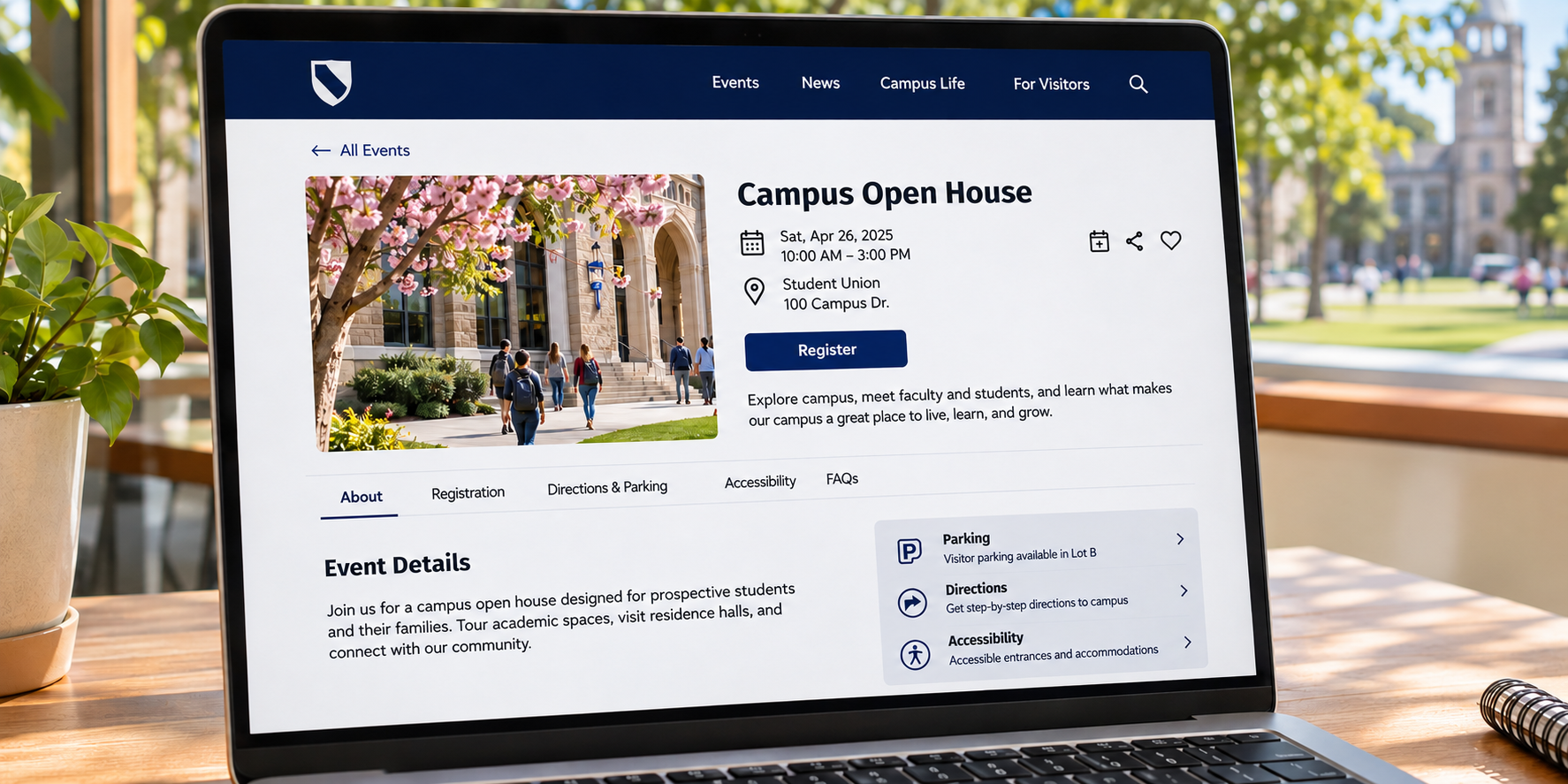
Getting someone interested in a campus event is an important first step. A guest speaker catches their attention, a performance sounds like a fun evening, or an open house gives them a reason to explore your institution. But interest usually comes with a few practical questions: Where do I park? Can I bring someone? Do I need to register?
For people who spend time on campus every day, these answers may seem obvious. For a first-time visitor, they can make the difference between feeling prepared and wondering whether attending will be more trouble than it's worth. Your event page is an opportunity to make that decision easier.
Let's explore the details that help visitors feel comfortable making plans and finding their way to your next campus event.
An event title gives visitors a starting point, but the description helps them picture themselves there. "Student Research Showcase," for example, could mean a formal presentation, an afternoon of browsing projects, or a chance to talk directly with students about their work. Someone unfamiliar with the event may not know which experience to expect.
A few sentences about what attendees will actually do can bring the event into focus. For a guest lecture, that might include the topic, the speaker's perspective, and whether there will be time for questions. For a family weekend activity, it might explain whether visitors can drop in or should plan to stay for the full program.
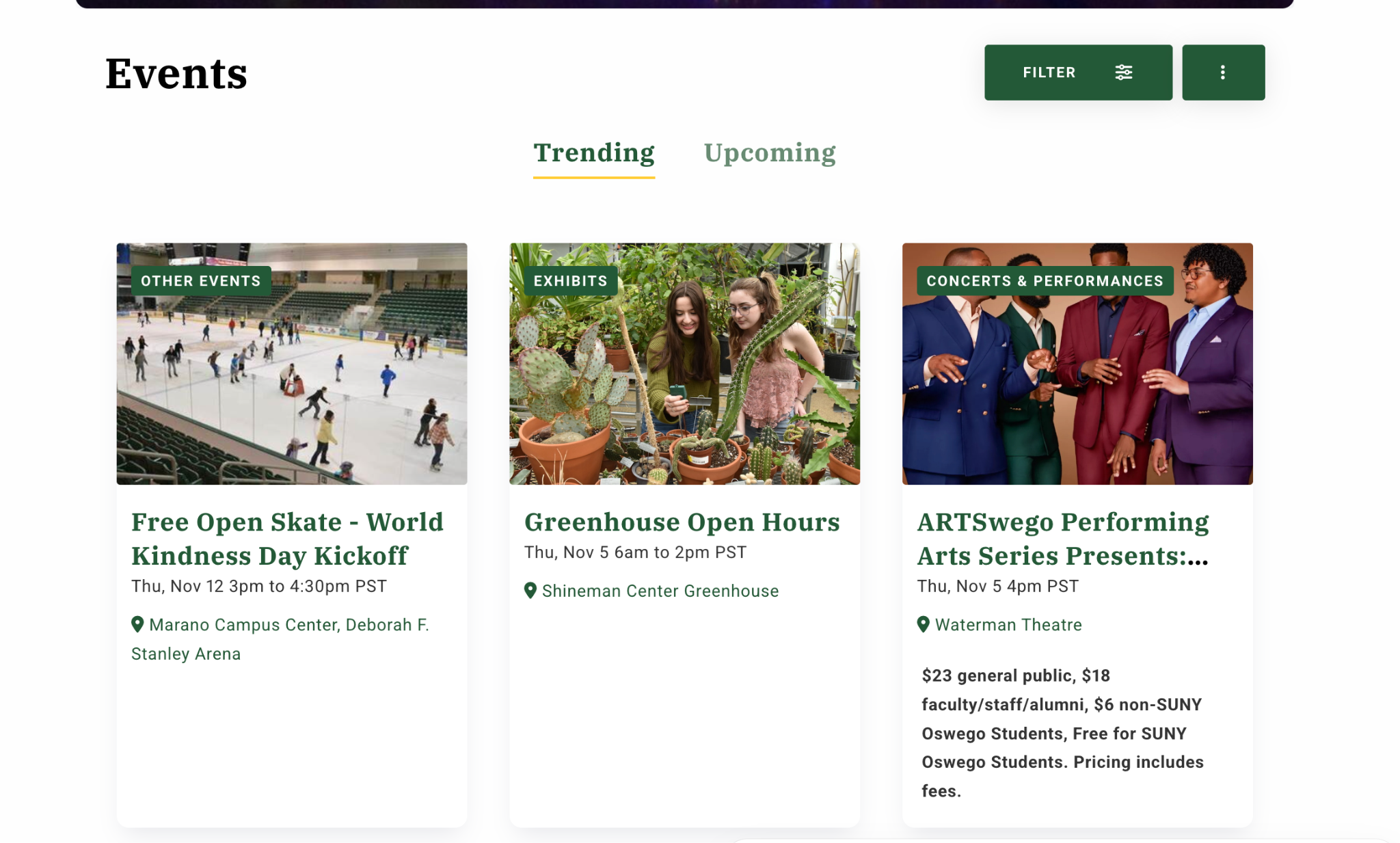
This is also a natural place to explain who can attend. Phrases such as "open to the public" or "students and their families are welcome" help people understand whether the invitation includes them. A community member shouldn't have to guess whether they need a campus connection to participate.
The start time tells visitors when the event begins. It doesn't always tell them when they should get there. A concert may start at 7 p.m., while doors open at 6:30. An admissions program might begin at 10 a.m., with check-in and refreshments available beforehand.
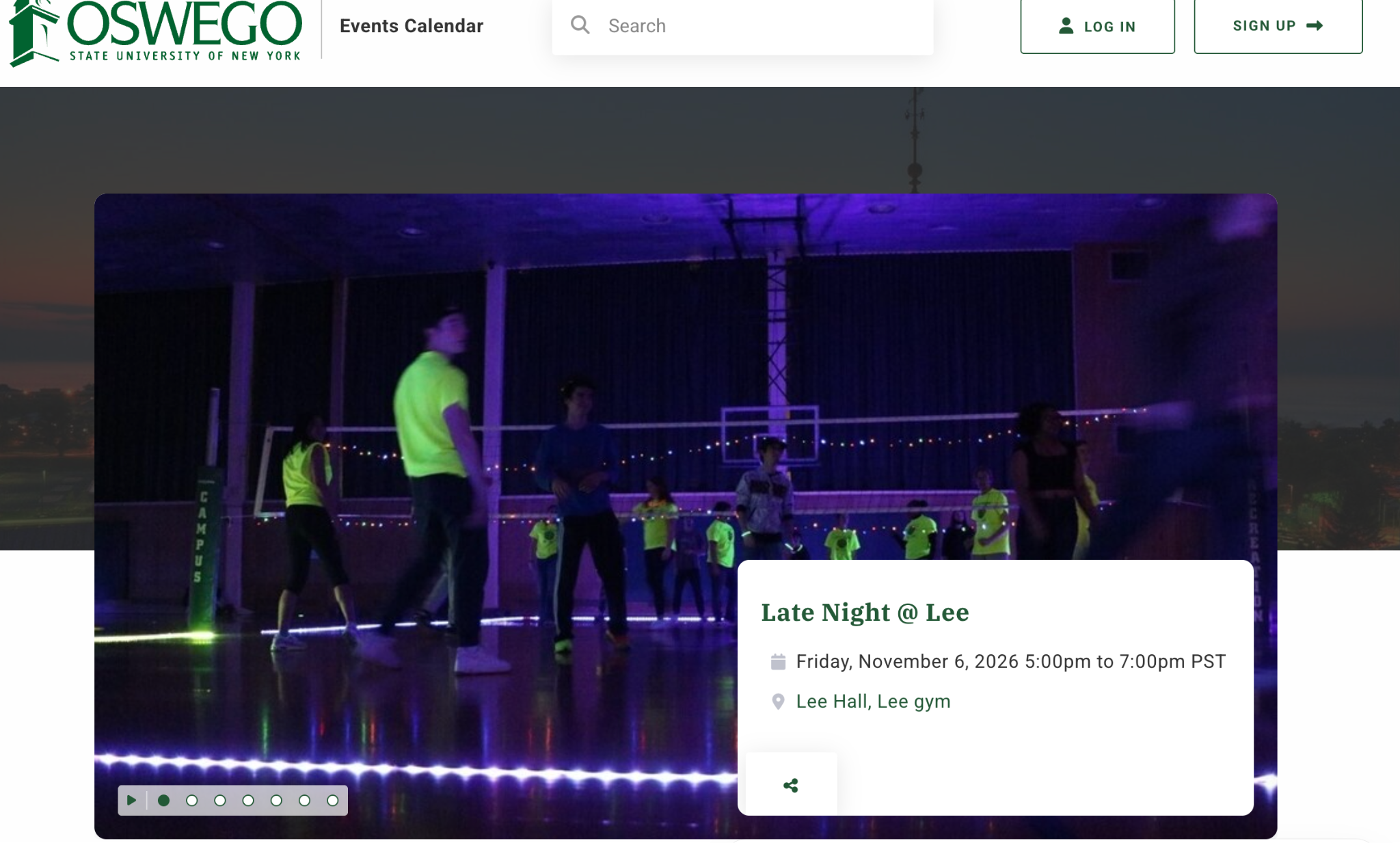
These details help attendees plan a more comfortable arrival. Someone who knows they’ll need time to park, check in, and find a seat can build that into their trip instead of discovering it at the door. An end time or approximate duration is useful for the same reason, especially for visitors arranging transportation or fitting the event around work and family commitments.
For events with flexible schedules, a little context goes a long way. "Stop by anytime between noon and 3 p.m." creates a different expectation from "The program begins at noon." Both are simple, but they help visitors make very different plans.
Campus landmarks become familiar quickly when you see them every day. That familiarity can make it easy to overlook how a location sounds to someone visiting for the first time. "Meet at the student center" may be enough for a current student, while a prospective family still needs to figure out which campus, which building, and which entrance.
A full venue name, street address, and room number give visitors a useful foundation. A link to the location on a campus map can help connect those details to the place they’re trying to find. For larger buildings, a short explanation of the entrance or check-in location can make the final part of the trip easier.
For example, "Check-in is inside the west entrance, across from the visitor parking lot" helps someone picture their arrival. It answers the question they’re likely to have after their navigation app announces that they’ve reached their destination.
Parking is one of those details that feels small until you’re circling an unfamiliar campus ten minutes before an event. Visitors may see several nearby lots without knowing which ones allow guests, whether payment is required, or how far they’ll need to walk.
Event-specific parking information helps remove that uncertainty. A named lot, a brief explanation of permits or fees, and a map link can give attendees a clearer plan before they leave home. If parking arrangements change for an evening performance or weekend game, the event page is a useful place to explain what applies that day.
Of course, visitors won’t all arrive by car. Depending on the location, a nearby transit stop, shuttle service, or passenger drop-off point may be just as helpful. The most useful information reflects how people can realistically reach that particular event.
An event can be free and still require registration. A ticket might reserve a seat, or seating might be available on a first-come basis. These differences matter to someone deciding whether to make the trip.
Clear registration and ticket information helps visitors understand what’s involved before committing. That includes any costs, deadlines, capacity limits, and whether walk-ins are welcome. If attendees need a mobile ticket, confirmation email, or ID at check-in, knowing that beforehand gives them one less thing to sort out when they arrive.
Other practical details belong here, too. A workshop might require a laptop, while an outdoor tour could involve a long walk. Families may want to know whether children can participate, and someone attending over lunch may wonder whether food is provided. The details will vary, but the purpose stays the same: helping visitors decide what works for them.
Visitors may have questions about accessible entrances, seating, accommodations, or the route from parking to the venue. Specific information about the event location can help them plan based on their individual needs.
For example, if an accessible entrance is on a different side of the building from general check-in, that detail is useful before arrival. Where information has been confirmed, the event page can explain available routes and arrangements, along with how to request accommodations.
A clear contact also makes the page more helpful. Even a thoughtful description won’t cover every situation, and visitors may need to ask something specific. Knowing whom to reach—and how—gives them a way to continue planning without searching across several campus websites.
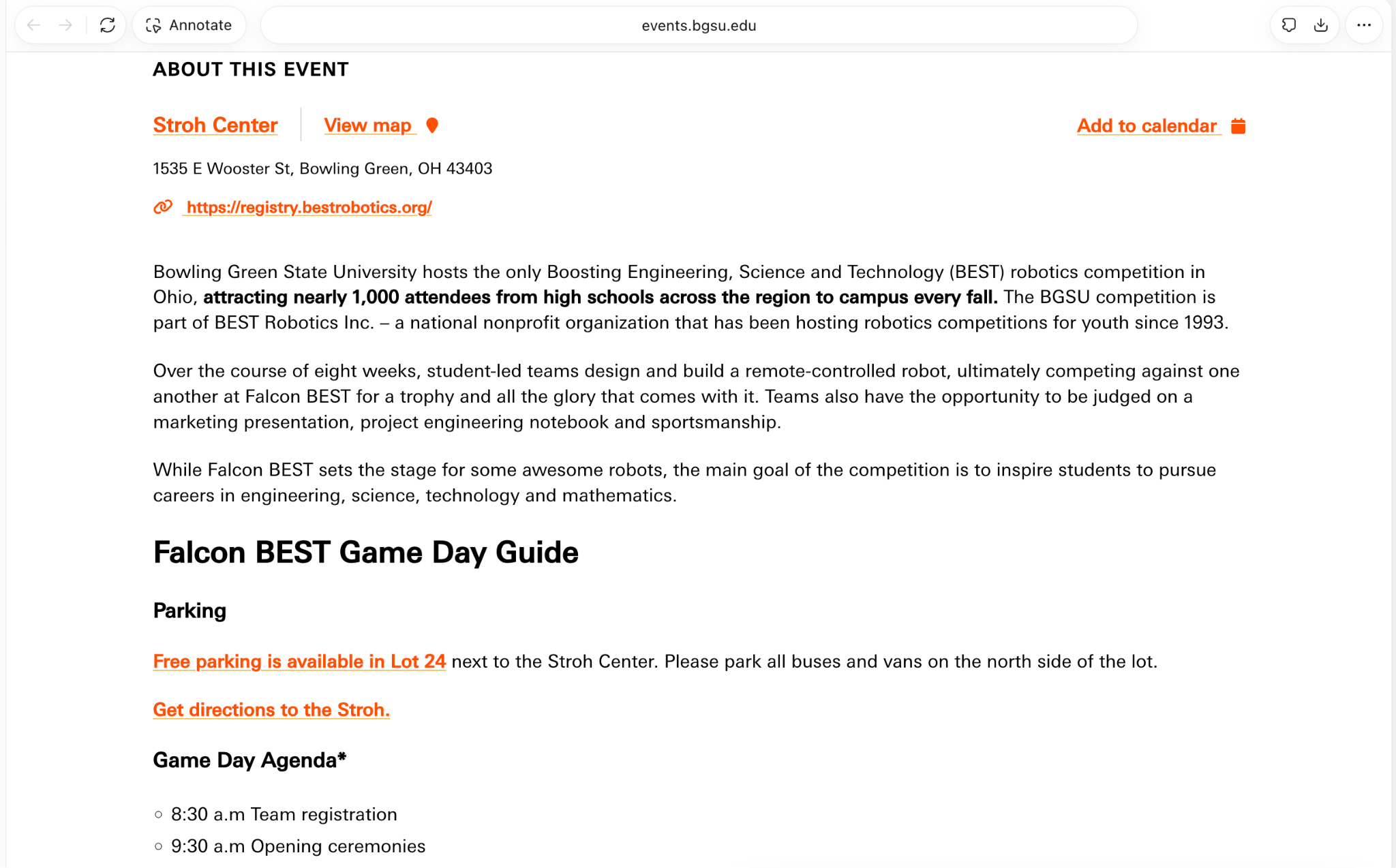
Here is an example of Bowling Green State University’s Falcon BEST Robotics Competition which gives visitors a clear parking plan before they arrive, including the recommended lot, the cost, and separate instructions for buses and vans.
A campus event page helps set expectations for the experience ahead. When visitors can understand the program, work out their arrival, and find answers to practical questions, they have a clearer path from "that sounds interesting" to "I'll be there."
For campus teams, this starts with considering the event from a visitor’s perspective. The building name everyone recognizes internally, the parking rule staff already know, or the registration step that seems obvious may all need a little explanation for someone new. Bringing those details together helps your event page feel like a welcome before visitors ever reach campus.
Explore Concept3D’s campus event calendar to see how your institution can help people discover events and prepare for their visit.


